Primary
Jewish audiences
Jewish audiences in the United States and worldwide.
Partnership
An original contemporary ensemble musical feature film.
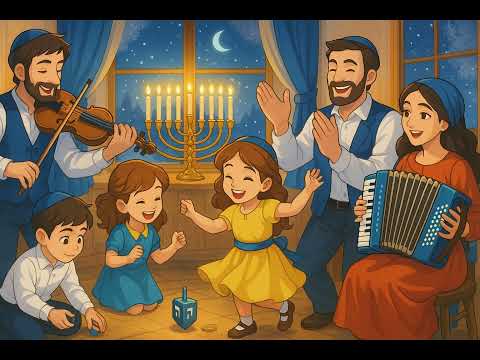
Old Jewish songs, carried through Russian memory, reborn in English for the youngest hands.
Seeking: a lead producer to package the proof-of-concept short, shape the production plan, and help move JEWISH toward full feature financing.
Why now
JEWISH is not only a film about Jewish songs. It is a secular humanist musical film about young people learning how to understand, respect, and accept one another across ethnic, racial, cultural, and personal differences.
In a divided world, JEWISH is a story about young people learning how not to hate.
Commercial hook
JEWISH revives a golden Jewish songbook by following the real path of transmission: old Jewish sources in Yiddish, Hebrew, Polish, and other languages, carried largely in Russian memory, then translated and adapted into English for a contemporary global audience.
In the film, Rebecca Shapiro's songbook is not a museum archive. It is a lived inheritance: Russian versions, older source fragments, recordings, family memory, and community memory that Joseph's students translate, argue with, remix, and rebuild in their own sound.
Songs such as Hava Nagila, Tumbalalaika, Hatikvah, Oyfn Pripetchik, Mezinka, and Tango of Auschwitz are cultural treasures.
The film does not treat them as relics. It turns them into contemporary musical cinema.
Not preservation as museum culture. Revival as popular music.
First audience
Primary
Jewish audiences in the United States and worldwide.
Identity
Viewers connected to Jewish memory, Israel, cultural continuity, immigrant memory, and Jewish representation.
Expansion
Musical fans, young audiences, families, educators, New York audiences, Broadway audiences, and viewers who enter the culture through music.
Accessibility
The viewer does not need to know Yiddish, Hebrew, Russian, or Jewish history before watching the film. The songs are translated and adapted into English. When non-English words appear, their meaning is clear from context.
Most of the student characters are not Jewish. The audience discovers Jewish songs, humor, memory, pain, and joy through the eyes of young people who are discovering them too.
The audience discovers the culture with the students, not before them.
Emotional engine
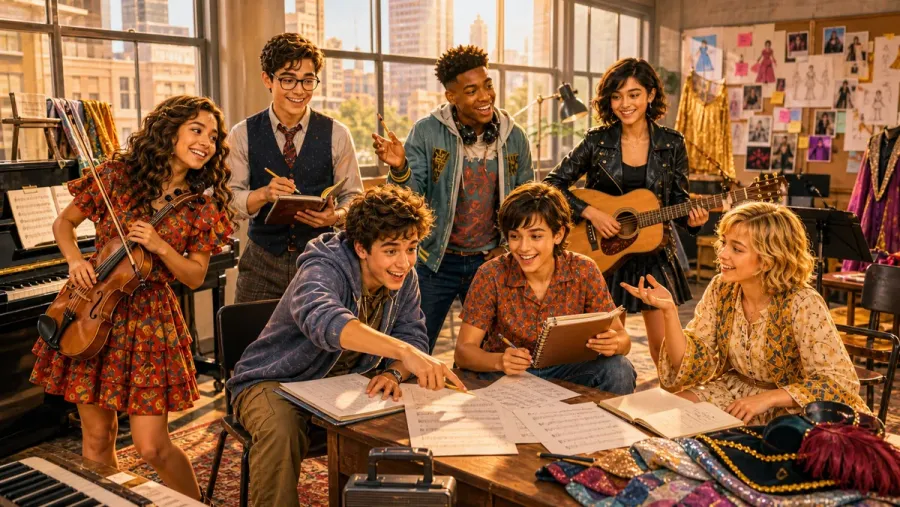
The central character of JEWISH is the class: 17-year-old students at the Midtown Arts School and Academy (MASA), an elite performing arts academy in Midtown Manhattan. They begin the year talented, ambitious, self-focused, skeptical, and emotionally unfinished.
Through the process of building the musical, confronting songs they did not understand, and learning the human stories behind them, they become more generous, more awake, more connected, and more ready for adulthood.
Most of that growth happens at OyPizza, a Jewish-Global cafe across from the school that is the ensemble's home base and the film's Central Perk. A daily open mic and spelling bee and a weekly OyPizza Has Talent turn rehearsal into public performance.
The surface question is whether they win. The deeper question is whether they become better human beings.
The world on screen
Three locations carry the whole film: an elite Manhattan arts school, the OyPizza cafe across Times Square, and the eleventh-grade class that turns an inherited songbook into modern arrangements.


Proof of reach
Before JEWISH was a film, it was a living catalog. Across dozens of countries, earlier Jewish song releases have generated millions of documented platform-reported views and streams and introduced deeply specific Jewish music to a largely non-Jewish audience. Because platform reports may overlap, the project does not add those totals together; dated evidence is available privately.
JEWISH was created, written, and produced by Walter J. Kin (RIGLI), its sole creator and founder. At the origin of the work stood two founding voices: the poet and translator Olga Anikina, who gave old Jewish melodies new Russian words, and the singer Elechka, who gave them her living voice. The film turns that real path of transmission into story.
Production strategy
The immediate production goal is a ten-minute proof-of-concept short film, not the full feature. The short should prove the tone, world, young ensemble, the MASA school and the OyPizza cafe, Joseph Shapiro, Rebecca's songbook, emotional stakes, and cinematic musical language.
First needed partner
The first serious partner needed is a lead producer.
Not just a financier. Not just a director. Not just a cultural supporter.
JEWISH needs a producer who can help package the proof-of-concept short, identify the right director, shape the production plan, connect the project to young performers, music supervision, choreography, Jewish cultural partners, and eventually position the feature film for financiers, festivals, streamers, and theatrical partners.
Private materials are available by request to qualified producers, production companies, cultural partners, and industry representatives.
Request
For producer inquiries, development conversations, proof-of-concept short discussions, or access to private materials, use the Contact / Materials Request page.
Partnership
An original contemporary ensemble musical feature film.
Old Jewish songs, carried through Russian memory, reborn in English for the youngest hands.
Seeking: a lead producer to package the proof-of-concept short, shape the production plan, and help move JEWISH toward full feature financing.
Why now
JEWISH is not only a film about Jewish songs. It is a secular humanist musical film about young people learning how to understand, respect, and accept one another across ethnic, racial, cultural, and personal differences.
In a divided world, JEWISH is a story about young people learning how not to hate.
Commercial hook
JEWISH revives a golden Jewish songbook by following the real path of transmission: old Jewish sources in Yiddish, Hebrew, Polish, and other languages, carried largely in Russian memory, then translated and adapted into English for a contemporary global audience.
In the film, Rebecca Shapiro's songbook is not a museum archive. It is a lived inheritance: Russian versions, older source fragments, recordings, family memory, and community memory that Joseph's students translate, argue with, remix, and rebuild in their own sound.
Songs such as Hava Nagila, Tumbalalaika, Hatikvah, Oyfn Pripetchik, Mezinka, and Tango of Auschwitz are cultural treasures.
The film does not treat them as relics. It turns them into contemporary musical cinema.
Not preservation as museum culture. Revival as popular music.
First audience
Primary
Jewish audiences in the United States and worldwide.
Identity
Viewers connected to Jewish memory, Israel, cultural continuity, immigrant memory, and Jewish representation.
Expansion
Musical fans, young audiences, families, educators, New York audiences, Broadway audiences, and viewers who enter the culture through music.
Accessibility
The viewer does not need to know Yiddish, Hebrew, Russian, or Jewish history before watching the film. The songs are translated and adapted into English. When non-English words appear, their meaning is clear from context.
Most of the student characters are not Jewish. The audience discovers Jewish songs, humor, memory, pain, and joy through the eyes of young people who are discovering them too.
The audience discovers the culture with the students, not before them.
Emotional engine
The central character of JEWISH is the class: 17-year-old students at the Midtown Arts School and Academy (MASA), an elite performing arts academy in Midtown Manhattan. They begin the year talented, ambitious, self-focused, skeptical, and emotionally unfinished.
Through the process of building the musical, confronting songs they did not understand, and learning the human stories behind them, they become more generous, more awake, more connected, and more ready for adulthood.
Most of that growth happens at OyPizza, a Jewish-Global cafe across from the school that is the ensemble's home base and the film's Central Perk. A daily open mic and spelling bee and a weekly OyPizza Has Talent turn rehearsal into public performance.
The surface question is whether they win. The deeper question is whether they become better human beings.
The world on screen
Three locations carry the whole film: an elite Manhattan arts school, the OyPizza cafe across Times Square, and the eleventh-grade class that turns an inherited songbook into modern arrangements.
Old songs, reborn
The class in rehearsal
Musical proof of quality
Before JEWISH was a film, it was a living catalog. Across dozens of countries, earlier Jewish song releases have generated millions of documented platform-reported views and streams and introduced deeply specific Jewish music to a largely non-Jewish audience. Because platform reports may overlap, the project does not add those totals together; dated evidence is available privately.
JEWISH was created, written, and produced by Walter J. Kin (RIGLI), its sole creator and founder. At the origin of the work stood two founding voices: the poet and translator Olga Anikina, who gave old Jewish melodies new Russian words, and the singer Elechka, who gave them her living voice. The film turns that real path of transmission into story.
Production strategy
The immediate production goal is a ten-minute proof-of-concept short film, not the full feature. The short should prove the tone, world, young ensemble, the MASA school and the OyPizza cafe, Joseph Shapiro, Rebecca's songbook, emotional stakes, and cinematic musical language.
First needed partner
The first serious partner needed is a lead producer.
Not just a financier. Not just a director. Not just a cultural supporter.
JEWISH needs a producer who can help package the proof-of-concept short, identify the right director, shape the production plan, connect the project to young performers, music supervision, choreography, Jewish cultural partners, and eventually position the feature film for financiers, festivals, streamers, and theatrical partners.
Private materials are available by request to qualified producers, production companies, cultural partners, and industry representatives.
Request
For producer inquiries, development conversations, proof-of-concept short discussions, or access to private materials, use the Contact / Materials Request page.